Thursday, November 15, 2012

A SIGN of CONTRADICTION


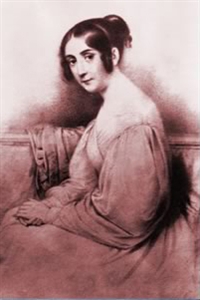
VENERABLE CORNELIA PEACOCK CONNELLY was born in Philadelphia on January 15, 1809. She was an attractive, well-educated woman with a lively personality. At 22, she married an Episcopalian minister, Pierce Connelly, and four years later, the young couple with their two children became Roman Catholics.

In early 1840, still grieving the death of her third child, a baby daughter, Cornelia made her first retreat of three days. God touched her deeply and her interior life was profoundly changed. She gave herself in a new way to God, desiring to do God's will as it was made known to her through her duties and the events of daily life.  Her growing attachment to God was tested that very year. In February, her beloved two-year-old, John Henry, was scalded in a tragic accident and died in Cornelia's arms. From this anguish was born in her a lifelong devotion to Mary as Mother of Sorrows.

In October of that same year another heartbreak came: Pierce told her he felt called to the priesthood. Cornelia was pregnant with their fifth child, and urged her husband to consider his proposal yet again, but added characteristically that if God asked it of her, she would make the sacrifice-and with all her heart.

Gradually Cornelia discovered her own vocation to be a Religious. In 1845 Pierce was ordained in Rome. Cornelia, hoping to join the Society of the Sacred Heart, went with two of her children to stay with the sisters in Rome, but finding no peace there, she prayed to know God's desires for her. These were made clear in a request from Pope Gregory XVI that she go to England.


In 1846 Mother Cornelia and three companions arrived in Derby and the Society of the Holy Child began. To her great sorrow she was ordered to send her children away to boarding schools. Many other deprivations filled her Society's small beginning, yet a spirit of joy and peace prevailed; Mother Cornelia was able to inspire in her sisters something of her own serenity in adversity.

Soon they were running schools for the poor, holding day, night and Sunday classes to accommodate the young factory workers, giving retreats and helping in the parish.

As her Society grew and its works flourished, great personal suffering again came to Mother Cornelia through Pierce. He renounced both his priesthood and his Catholic faith, removed their three children from the schools they were attending and denied her all contact with them, hoping thus to force her to return to him as his wife. He even pressed a lawsuit against her that gained notoriety in England, but he eventually lost the case.


In this suffering, Venerable Cornelia clung steadfastly to God, her strength. She wrote in her notebook, “I belong all to God,” and this total belonging freed her to give herself to others. Her love for God grew and she sought joyfully to live her life as one continuous act of love. The mystery of God embracing all that is human was the foundation of her charism.

Venerable Cornelia Connelly died in 1879, at St. Leonards-on-Sea, Sussex and was proclaimed Venerable in 1992.

Today, there are Sisters of the Holy Child Jesus in fifteen countries, living the apostolic life as Venerable Cornelia did, seeking  to meet the needs of our age through works of spiritual mercy. They are engaged in educational and related spiritual and pastoral ministries.

Ursuline Convent, New Orleans

Tuesday, November 13, 2012

WE NEED MORE LAY SAINTS

Gwen Coniker

Jerry & Gwen
Gwen Cecilia (Billings) Coniker was born in Chicago in 1939. She met her future husband when she was 15 years old, while both were in High School. They were married in 1959. At the end of the wedding Mass, they consecrated their marriage to Jesus through Mary at Our Lady’s side altar. In December of that same year, both Gwen and Jerry became deeply involved in the right-to-life and family values movement.

Jerry started his own business systems and manufacturing company  in 1961. For ten years, they worked vigorously for the family values movement for which they organized volunteers.

In 1971 the direction of their lives was drastically changed when they made their consecration to Jesus through Mary according to the formula of St. Louis de Montfort. The same formula (Totus Tuus) that changed the life of Karol Wojtyla, now Bl. Pope John Paul II, to whom the Conikers have devoted their life by carrying out his teachings throughout the world.

On May 13, 1971, the Feast of Our Lady of Fatima, the Conikers sold their home and soon after, their business. On September 8th of that same year, they moved their family to Fatima, Portugal, which turned into a two-year retreat and preparation time for their work in the Church. A pro-life activist concerned for the family, Jerry decided he "couldn't succeed politically without bringing people back to God."


Gwen presenting to Bl. John Paul II
In  1973, the Conikers returned to the United States and Jerry became the executive director of a Franciscan ministry, the Militia Immaculata, in Wisconsin.. Two years later, they officially started the Apostolate for Family Consecration, a family-values oriented movement, in Kenosha, Wisconsin

In October of 1990, they established the present 950-acre Catholic Familyland in Bloomingdale, Ohio, at the former Steubenville diocesan seminary. Each year are conducted “Holy Family Fest” vacations for families, Totus Tuus weekend conferences and Marriage Get Away Weekends for thousands of participants.

On April 29, 1999, Bl. Pope John Paul II appointed Jerry and Gwen Coniker to be one of 20 couples in the world that are members of his Pontifical Council for the Family, advising him on family matters in the world.
with Bl.. Mother Teresa

On October 14, 2000, having been asked by Bl. Pope John Paul II  to represent the theme "Children, the Springtime of Hope for Family and Society" for the great Jubilee of Families at St. Peter’s Square, the Coniker family personally greeted the Holy Father and presented to him the international work and mission of the Apostolate for Family Consecration.

In 2001, Jerry and Gwen as a couple received the Pro Ecclesia et Pontifice Award from the Holy Father. This papal award was instituted by Pope Leo XIII on July 7, 1888 and is bestowed upon persons who have given outstanding service to the Church.

Two months later, on December 15, 2001, Gwen was made Lady Guenevere of the Pontifical Order of St. Michael of the Wing of Portugal (since then Crown Prince of Portugal, the Duke of Braganza, made Jerry Coniker a knight). This is one of the oldest knight orders of the Church that has pontifical status and its main purpose is to protect the Church.

Gwen Coniker died of cancer in 2002, and in June 2007 the Bishop of Steubenville let the cause for her canonization proceed. The initial investigation, into whether she showed "heroic virtue," began that September. Part of the evidence presented was her refusing to abort her eleventh child, Theresa, when her doctor said the pregnancy would burst her uterus and kill her. The baby was delivered safely, and she had two more children.

Conicker Family- Gwen, on left

Sunday, November 11, 2012

ANOTHER AMERICAN SERVANT of the POOR


Nathaniel with his children

SERVANT of GOD ROSE HAWTHORNE, the second daughter of Nathaniel and Sophia Hawthorne, converted to Roman Catholicism in 1891 and founded a religious order to care for victims of cancer.

Born in Lenox, Mass., May 20, 1851, Rose grew up moving from place to place. She lived in West Newton and Concord, Mass. and as an infant in Liverpool, England, then London, Paris, Rome, and Florence, Italy. Her family returned to Concord in 1860 and her father died in 1864. Her mother then moved the family to Germany and then England.

Rose had an unhappy marriage to George Parsons Lathrop, who became assistant editor of Atlantic Monthly, and who edited a collected edition of Hawthorne's works in 1883. George was an alcoholic and their son, Francis, born in 1876, died five years later of diphtheria.

Rose wrote short stories and verse. A book of poems, Along the Shore, was published in 1888.
She separated from her husband and moved to New York. There she trained as a nurse in order to aid cancer victims. To help raise money, she wrote Memories of Hawthorne in 1897. She opened a refuge for cancer victims on New York's Lower East Side. Her husband died in 1898 and a year later she moved to a larger house, St. Rose's Free Home for Incurable Cancer.

Serv. of God Rose made her vows as a Dominican nun Dec. 8, 1900, taking the name Alphonsa. With her first companion, Sister M. Rose, she founded the Dominican Congregation of St. Rose of Lima, later called the Servants of Relief for Incurable Cancer.

Ser. of God Rose's interest in cancer was prompted by her friendship with the poet Emma Lazarus, author of the inscription on the base of the Statue of Liberty. During a conversation she learned that Emma was suffering from cancer. In the late 1800s, cancer carried a fierce stigma and was believed to be contagious. Although Emma was well cared for until she died, others who contracted the disease were not so lucky. People with cancer who had no economic resources were sent to the grim Blackwell's Island, New York City's last resort for the penniless.

So remarkable was Ser. of God Rose’s vision that she determined to provide the very best of care for the cancerous poor, for free. There was to be no class system, no "upstairs/downstairs" for her residents. She and her religious sisters would be the servants. The residents would be the object of all their care and concern.

It is significant that she referred to her residents as "Christ's poor" because she found the source and inspiration for all that she did in Christ himself. She knew His love when her own marriage floundered; she knew His love when she lost her first-born and only child. She came to know the full meaning of the Sacred Heart of Jesus, that she was loved by Him and could depend on Him for everything she needed. Her needs were great and depend on Him she did!


In 1901, Ser. of God Rose opened Rosary Hill Home in Hawthorne, New York (now the Mother Home of the Order). She died there July 9, 1926, the anniversary of her parents' wedding. She had served the poor with incurable cancer for thirty years.

Excerpt from a letter from Mark Twain to Rose Hawthorne Lathrop:

"And certainly if there is an unassailably good cause in the world, it is this one undertaken by the Dominican Sisters, of housing, nourishing, and nursing the most pathetically unfortunate of all the afflicted among us — men and women sentenced to a painful and lingering death by incurable disease. I have seen [this lofty work of yours] rise from seedling to tree with no endowment but the voluntary aid which your patient labor and faith have drawn from the purses of grateful and compassionate men; and I am glad. . . to know that this prosperity will continue and be permanent . . . . It cannot fail until pity fails in the hearts of men, and that will never be."

Serv. of God Rose Hawthorne


Friday, November 9, 2012

THEY GAVE THEIR LIFE FOR LIFE

St. Gianna
We all know the story of  ST. GIANNA BERETTA MOLLA ( 1922-62) an Italian pediatrician, wife and mother who refused both an abortion and a hysterectomy when she was pregnant with her fourth child, despite knowing that continuing with the pregnancy could result in her death.
Gianna was beatified by Pope John Paul II on April 24, 1994, and officially canonized a saint on May 16, 2004. St. Gianna's husband Pietro, and their child Laura, were present at the canonization ceremony, the first time in the history of the Church that a husband witnessed his wife's canonization. Today that child is a physician herself, and involved in the pro-life movement.
St. Gianna is a patron saint for mothers, physicians


Ruth Pakaluk

In the USA
RUTH PAKALUK
was born in 1957 into a Presbyterian family, Ruth studied literature at Harvard where she met her future husband. The Pakaluks made a deliberate decision to search for God and to see if Christianity was true. Their search led them finally into the Catholic Church and they had seven children. After the sixth baby, Sarah, was born Ruth discovered too late that she had breast cancer. Treatment followed and thinking she was in the clear, they had another baby, Sophie. But the cancer returned and Ruth died, aged 41, in 1998.

What was extraordinary was the amount that Ruth managed to pack into her abridged life, especially in pro-life activity. As a young student she had had no religious beliefs, saw herself as a feminist and believed in “a woman’s right to choose”. Becoming a Christian opened her eyes to truth at every level and the experience of having her first child taught her that fighting for the lives of unborn children was the most fundamental and urgent cause of all.

The core of her pro-life argument centered on the question of abortion and human rights: human rights pertain to us because we are human; the basic human right is the right to life and so, if that right is denied, then all human rights are denied. What is growing in the womb is alive and it is human; thus, to deny that it has the right to life is to deny that anyone has any rights whatsoever.

As well as raising her children and supporting her husband during his own academic career, Ruth threw all her formidable energy and intelligence into pro-life work in the Massachusetts area. She showed, with her own commitment to life, what one person can do for a cause when they focus their energies.

The first major blow to strike the Pakaluk family fell on November 13, 1989. Checking on 6-week-old Thomas, who had been napping, Ruth found that the baby had turned blue. Little Thomas had stopped breathing. He was a victim of the mysterious "crib death" syndrome.
Ruth & Michael & Family

The grieving had barely ended when the second blow fell: Ruth was diagnosed with breast cancer. She would endure a major operation, and weeks of intensive chemotherapy. Then there were several months of anxious prayer as the doctors waited to see whether the cancer has been eliminated. Finally, after a year, the Pakaluks received the good news that Ruth's cancer was in remission.

Life returned to normal, or as close to normal as an overcrowded family schedule would allow. A seventh child, Sophie, was born. Then, after four happy years, the third blow fell. Suffering from a persistent pain in her leg, Ruth visited the doctor, and was told that the cancer had returned. This time the disease had invaded her bones; she would need another operation, and spend her last months with a metal rod in her leg to bolster the limb. Worse, the doctor announced that the cancer was spreading; Ruth had only about one year to live.

As it happens, that prognosis was inaccurate; Ruth would keep up her normal schedule for another three years. But while she enjoyed months of apparently normal health, free of symptoms, Ruth and Michael knew that the superficial appearances were deceiving, and the cancer was eating its way through her body.

In a network of friends that now stretched across at least three continents, hundreds of people were now praying for a miracle cure. But Ruth, who had packed so much activity into her 41 years, had a different perspective. "Why would I want a cure?  Why would I trade the face of God for life on this earth?"

Toward the end, Ruth summed up her approach to the moral life in two characteristically imperatives: "Know God's will. Do God's will." As she saw things, it was not terribly important for a Christian to comprehend the entirety of God's design for human history, much less to understand the particular crises and reversals of each passing day. It only mattered whether the individual knew what God wanted of her that day, and whether she did it.


 After her death, her husband compiled the letters she had written to family and friends throughout her adulthood and published them in a book called The Appalling Strangeness of the Mercy of God. In an introduction to the book, Boston College professor Peter Kreeft writes that "people in Worcester wished to consider opening her cause for sainthood" soon after she died. Her cause for canonization as a Catholic saint is now underway.


ITALY
CHIARA CORBELLA
d. June 13, 2012
At 28 years of age, Chiara was happily married to Enrico Petrillo. They had already suffered the loss of two children who died from birth defects. The couple became popular speakers at pro-life events.

In 2010, Chiara became pregnant for the third time, and according to doctors the child was developing normally. However, Chiara was diagnosed with an aggressive form of cancer and was advised to begin receiving treatment that would have posed a risk to her pregnancy.

Chiara decided to protect the baby, Francisco, and opted to forgo treatment until after his birth, which took place on May 30, 2011.

Her cancer quickly progressed and eventually she lost sight in one eye. After a year-long battle Chiara died surrounded by her loved ones, convinced that she would be reunited with her two children in heaven.

“I am going to heaven to take care of Maria and David, you stay here with Dad. I will pray for you,” Chiara said in a letter for Francisco that she wrote one week before her death.

The funeral Mass was celebrated by the Vicar General of Rome, Cardinal Agostino Vallini, who recalled Chiara as “the second Gianna Beretta,” the 20th century saint who sacrificed her life in similar circumstances to save her unborn baby.

SPAIN- July 13 2012
BARBARA CASTRO GARCIA, a Catholic journalist whose story of heroism closely parallels that of Chiara Corbella. Four months into the pregnancy, Barbara took a trip to the dentist complaining of a sore in her mouth. The dentist sent her on to a specialist, who diagnosed her with mouth cancer.

The couple was presented with a dilemma: Barbara urgently needed life-saving treatment, but the treatment had the potential to harm their unborn child. Bolstered by her Catholic faith Barbara, who worked as a journalist in the communications office of the Catholic diocese of Cordoba, made the difficult decision to forgo all treatments except for a surgical procedure that left her in immense pain. She  died a year after Barbarita was born.

Barbara with daught
A statement on the diocese of Cordoba’s website remembers Barbara’s faith at this time. “Anchored in the heart of Christ, the inexhaustible source of love, Barbara opted first for the life of her daughter ,” the diocese says. “At all times she has maintained an unwavering faith, and has been the encouragement and hope for all who have surrounded her during this long and painful illness.”

Aug.  2012
Out of ENGLAND comes a miraculous story of a courageous mother, 41-year-old  JO POWELL, who discovered a lump on her breast days after finding out she was pregnant with first child. Jo and her husband Richard were thrilled when they discovered Jo was pregnant, after years of trying for a baby. But their joy turned to devastation when days later, doctors revealed she had breast cancer. She was
advised to terminate the pregnancy but refused.
Jo & Richard with  Jake

She insisted she would not start life-saving treatment until she was nearly full-term and baby Jake was big enough to survive.
Amazingly, her gamble paid off. Now, two years after first being first diagnosed, she has a healthy little boy and has been told the cancer will not return.


Icon-  St. Gianna, T. Harasti (Canada)

Wednesday, November 7, 2012

AMERICA'S FIRST MYSTIC?

 It is amazing to see saints who have lived within our own lifetime and in our "backyard"! Gives us hope that with God all things are possible!


VENERABLE SOLANUS CASEY was born on November 25, 1870 on a farm in Wisconsin. His Irish immigrant parents named him Bernard. He was the sixth child in a family of ten boys and six girls. After he left the farm he worked throughout Wisconsin and Minnesota as a logger, a hospital orderly, a street car operator, and a prison guard.

At the age of 21, Bernard entered St. Francis High School Seminary in Milwaukee to study for the diocesan priesthood. Five years later he decided to enter a religious order. He was invested in the Capuchin Order at Detroit in 1897 and received his religious name of Solanus.

He performed poorly academically so wasn't allowed to hear confessions or give sermons. Instead, he served primarly in the humble capacity of receptionist and doorkeeper at friaries and monasteries for 40 years.
Lewis Williams

The Father Solanus Guild
After his ordination in 1904, Ven. Solanus spent 20 years in New York, Harlem, and Yonkers. In 1924 he was sent to St. Bonaventure Monastery in Detroit where he worked for 20 years. In 1945, he returned to New York for one year. He was assigned to Huntington, Indiana from 1946 to 1956. He was reassigned to St. Bonaventure in 1956.


Ven. Solanus spent his life in the service of people. At the monastery door, he met thousands of persons from every age and walk of life. In time of trouble and sorrow, they sought his prayers and advice. Many attributed favors to his prayers. He constantly showed his love of God by loving all of God’s people. He was always ready and willing to listen to anyone any time of the day or night. In return he asked people to love and support the missions. He was a man of rare holiness. A mystic.

During the Great Depression, the number of daily patrons of the monastery's soup kitchen tripled and Ven. Solanus joined the expanded efforts. Arthur Rutledge came to Ven.Solanus with a stomach tumor. Ven. Solanus told him go back to the doctor and check again, then come and help in the soup kitchen. The doctor found that the tumor was gone and the kitchen had a new volunteer.


In January 1956, diagnosed with skin cancer, his superiors decided to send him back to Detroit to be near expert medical care. His contact with petitioners was restricted.


A novice recalled that on the last Christmas evening before the death of Father Solanus, he overheard the friar playing his violin alone in the chapel, singing Christmas carols to the Christ Child.
1956


During his final illness, he remarked: "I'm offering my suffering that all might be one. If only I could see the conversion of the whole world." His last conscious act was to sit up in bed and exclaim, "I give my soul to Jesus Christ." He died in Detroit at the age of 86 on July 31, 1957 and is buried at St. Bonaventure Monastery.


Monday, November 5, 2012

ANOTHER SOLDIER SAINT-DIFFERENT WAR


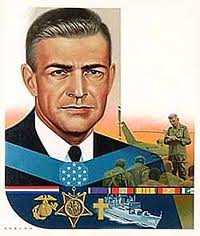
SERVANT of GOD VINCENT ROBERT CAPODANNO was a United States Navy Roman Catholic chaplain and a posthumous recipient of America's highest military decoration, the Medal of Honor, for actions during the Vietnam War.

Vincent R. Capodanno was born in Staten Island, New York, on February 13, 1929. He graduated from Curtis High School, Staten Island, and attended Fordham University for a year before entering the Maryknoll Missionary Seminary in Ossining, New York. He was ordained a Roman Catholic priest in June 1957.

Father Capodanno's first assignment as a missionary was with aboriginal Taiwanese in the mountains of Taiwan where he served in a parish and later in a school. After seven years, Father Capodanno returned to the United States for leave and then was assigned to a Maryknoll school in Hong Kong.

In December 1965, Father Capodanno received his commission as a lieutenant in the Navy Chaplain Corps. He was assigned to the First Marine Division in Vietnam in April 1966.


At 4:30 am, September 4, 1967, during Operation Swift in the Thang Binh District of the Que Son Valley, elements of the 1st Battalion 5th Marines encountered a large North Vietnamese unit of approximately 2500 men near the village of Dong Son. The outnumbered and disorganized Company D was in need of reinforcements. By 9:14 A.M. twenty-six Marines were confirmed dead and another company of Marines was committed to the battle. At 9:25  the commander of 1st Battalion 5th Marine requested further reinforcements.

Lewis Williams,  SFO


Father Capodanno went among the wounded and dying, giving last rites and taking care of his Marines. Wounded once in the face and having his hand almost severed, he went to help a wounded corpsman only yards from an enemy machine gun and was killed. His body was recovered and interred in his family's plot in Saint Peters Cemetery, Staten Island, New York.

On December 27, 1968, then Secretary of the Navy Paul Ignatius notified the Capodanno family that Lieutenant Capodanno would posthumously be awarded the Medal of Honor in recognition of his selfless sacrifice. The official ceremony was held January 7, 1969.

Saint Vincent's Chapel was the Capodanno family's first choice as a memorial. Within four months after his death, almost $4,000 had been raised by organizations such as The American Legion, The Veterans of Foreign Wars, the Knights of Columbus and the Marine Corps League. The Chapel, however, was not completed until 1993. It was built in the small mountain town of Thiankou with the help of Father Dan Dolan, another Maryknoller and Father Capodanno's former pastor when he was a missionary in Taiwan.


Monument to Father Capodanno, Staten Island
On May 19, 2002, Father Capodanno's Cause for Canonization was officially opened.

Sunday, November 4, 2012

A SOLDIER SAINT

(Wendy Lewis)

SERVANT of GOD  FATHER EMIL KAPAUN
, was born in Pilsen, Kansas of Czech immigrants on Holy Thursday, April 20, 1916.  He graduated from Conception Abbey (Benedictine) seminary college in Conception, Missouri, in June 1936. He then attended Kenrick Theological Seminary in St. Louis, where he was ordained in June 1940. He entered the U.S. Army Chaplain Corps in 1944 and ministered to approximately 19,000 service men and women. Separated from the service in 1946, he re-entered the Army in 1948 and was sent to Japan the following year.

First Holy Communion

In July of 1950 Father Kapaun was ordered to Korea. Later that year- he was captured near Unsan, North Korea. The POWs marched for 87 miles to a prison camp near Pyoktong, North Korea. Father Kapaun was able to influence some prisoners, who were ignoring orders from officers, to carry the wounded. At the camp, he dug latrines, mediated disputes, gave away his own food, and raised morale among the prisoners. He also led prisoners in acts of defiance and smuggled dysentery drugs to the doctor, Sidney Esensten. In the seven months in prison, Father Kapaun spent himself in heroic service to his fellow prisoners without regard for race, color or creed. According to fellow soldiers, he repeatedly saved lives.
His main complaint was lack of sleep for several weeks at a time. He constantly ministered to the dead and dying while performing baptisms, hearing first Confessions, offering Holy Communion and celebrating Mass from an improvised altar set up on the front end of an army jeep. He constantly would lose his Mass kit, and jeep and trailer to enemy fire. He told how he was thoroughly convinced that the prayers of many others were what had saved him so many times up until his capture. He was awarded the Bronze Star Medal in September 1950 just before his capture.

Soldiers of all faiths said he made pans for sanitizing water, gave away his meager rations to starving soldiers, and inspired hundreds of starving soldiers to rally, not only to stay alive but to defy Communist captors who tried to force soldiers to betray their country.

Ignoring his own ill health, he nursed the sick and wounded until a blood clot in his leg prevented his daily rounds.  Moved to a so-called hospital, but denied medical assistance, his death soon followed on May 23, 1951.  He was buried in a mass grave near the Yalu River.

In August 18, 1951, Father Kapaun was posthumously awarded the Distinguished Service Cross for his actions.
Memorial, Pilsen, Kansas

He was most remembered for his great humility, bravery, his constancy, his love and kindness and solicitude for his fellow prisoners. "He was their hero... their admired and beloved "padre." He kept up the G.I.'s morale, and most of all, made it possible for a lot of men to become good Catholics."

A detailed account of Servant of God Emil Kapaun's life is recounted in Fr. Arthur Tonne's Chaplain Kapaun: Patriot Priest of the Korean Conflict. The author writes:

    "In a very definite sense, we are all beneficiaries from the life of Fr. Kapaun. He has left us a stirring example of devotion to duty. He has passed on to us a spirit of tolerance and understanding. He has given us a share of dauntless bravery - of body and soul. He has transmitted to every one of us a new appreciation of America, and a keener, more realistic understanding of our country's greatest enemy- godlessness, now stalking the world in the form of communism. He has bequeathed a picture of Christ-like life. What Fr. Kapaun willed to us cannot be contained in memorials, however costly or beautiful. It is a treasure for the human soul — the spirit of one who loved and served God and man — even unto death."

Wendy Lewis- Newman University