Thursday, July 4, 2013

INDEPENDENCE DAY


As I was pondering what to write for the celebration of our Independence, I came across a headline that a Syrian Catholic priest had been beheaded by jihadist fighters in northern Syria. The death of Franciscan Father Francois Murad (49) was confirmed by the official Vatican news agency. It made me aware of the freedom in our own country as opposed to many, especially in the middle east, where basic human rights are sorely lacking.

One of the most important fundamental principles of human rights, and one that is now protected in the laws of many nations around the world and in global compacts like the Universal Declaration of Human Rights (1948), is FREEDOM of RELIGION.

Freedom of religion was first applied as a principle of government in the founding of the colony of Maryland,  by the Catholic Lord Baltimore, in 1634. Most Americans know that religious freedom is one of the most basic freedoms guaranteed in the U.S. Constitution. Frequently called the “first freedom,” freedom of religion is prominent in the American founding documents and gives rise to many other freedoms.

Freedom of religion is a principle that supports the freedom of an individual or community, in public or private, to manifest religion or belief in teaching, practice, worship, and observance.
Norman Rockwell

Freedom of religion is considered by many people and nations to be a fundamental human right. In a country with a state religion, freedom of religion is generally considered to mean that the government permits religious practices of other sects besides the state religion, and does not persecute believers in other faiths.

The US Conference of Catholic Bishops is sponsoring another Fortnight for Freedom this year from June 21 to July 4, in response to the still looming threats to our religious freedom.

In 1965 Pope Paul VI wrote a declaration on Religious Freedom: DIGNITATIS HUMANAE (DIGNITY OF THE HUMAN PERSON), which dealt with the right of the person and of communities to social and civil freedom in matters of religion.  Here I quote the first paragraph, which is far more eloquent than anything I can say:

 A sense of the dignity of the human person has been impressing itself more and more deeply on the consciousness of contemporary man, and the demand is increasingly made that men should act on their own judgment, enjoying and making use of a responsible freedom, not driven by coercion but motivated by a sense of duty. The demand is likewise made that constitutional limits should be set to the powers of government, in order that there may be no encroachment on the rightful freedom of the person and of associations. This demand for freedom in human society chiefly regards the quest for the values proper to the human spirit. It regards, in the first place, the free exercise of religion in society. This Vatican Council takes careful note of these desires in the minds of men. It proposes to declare them to be greatly in accord with truth and justice. To this end, it searches into the sacred tradition and doctrine of the Church-the treasury out of which the Church continually brings forth new things that are in harmony with the things that are old.


Prayer at Valley Forge- Arnold Friberg  (1913-2010)

This council greets with joy the first of these two facts as among the signs of the times. With sorrow, however, it denounces the other fact, as only to be deplored. The council exhorts Catholics, and it directs a plea to all men, most carefully to consider how greatly necessary religious freedom is, especially in the present condition of the human family. All nations are coming into even closer unity. Men of different cultures and religions are being brought together in closer relationships. There is a growing consciousness of the personal responsibility that every man has. All this is evident. Consequently, in order that relationships of peace and harmony be established and maintained within the whole of mankind, it is necessary that religious freedom be everywhere provided with an effective constitutional guarantee and that respect be shown for the high duty and right of man freely to lead his religious life in society.

The declaration ends with this prayer- may it be for all of us on this week of our Independence.  May the God and Father of all grant that the human family, through careful observance of the principle of religious freedom in society,  be brought by the grace of Christ and the power of the Holy Spirit to the sublime and unending and "glorious freedom of the sons of God" (Rom. 8:21).


Monday, July 1, 2013

CATHOLIC ART in AMERICA

Daniel Mitsui- Pentecost

I have been recently asked where I find the art which I use in my Blog. While I certainly love classical art, I am these days drawn to more modern art, esp. naive (naif) or primitive works and those of other ethnic backgrounds.  Since we know the more traditional works of art, I think it is fun to find artists from our own times. As I have said in other Blogs, I love the Japanese Sadao Watanabe and the Chinese-American artist Dr. He Qi (both of whom I have used in many recent blogs).

 C.S. Lewis in The Weight of Glory wrote:  “We do not want merely to see beauty… We want something else which can hardly be put into words – to be united with the beauty we see, to pass into it, to receive it into ourselves, to bathe in it, to become part of it… At present we are on the outside of the world, the wrong side of the door. We cannot mingle with the splendors we see. But all the leaves of the New Testament are rustling with the rumor that it will not always be so. Some day, God willing, we shall get in.”
Jodi  Simmons- The True Vine

While Europe and now many in the East, have many wonderful Catholic artists, there seems to be a dirth in our own country. We do have Daniel Mitsui, Matthew Alderman,  Bernard Brussel-Smith (1914-89), Jodi Simmons, Edward Knippers, George Tooker (1920-2011), Father John Giuliani, Carl Schmitt (1889-1989), Dan Paulos,  and of course the wonderful artists of the Santos tradition in NM and other places in the USA.

 Dana Gioia, Catholic poet and former chairman of the National Endowment for the Arts said he considers the lack of Catholics in the arts to be a “paradox,” given the Catholic Church’s long tradition as “patron and mentor” to the arts and the strength of the largest cultural minority in the United States. It is particularly ironic, Dana added, in a nation where “diversity of culture and ethnicity are actively celebrated.”


Matthew Alderman
B. Bussel- Smith- Apostles
Charles M. Carrillo, NM


Fr. John Guiliani - Holy Family with Lamb


Edward Knippers


Carl Schmitt- Eclipse

Dan Paulos- Our Lady of Auschwitz


Friday, June 28, 2013

SAINTS PETER AND PAUL

Sts. Peter and Paul-  El Greco

Today we celebrate  two great saints who are proof  that God can work through anybody. We have St. Peter, a brash, thick-headed fisherman, inclined to say whatever popped into his head without thinking, and St. Paul, that well educated Pharisee who persecuted  the Church, later becoming its great champion.

I would speculate it was quite hard for St. Peter to accept (at least at first) this "upstart" who was not one of the Twelve and had never known Jesus. Peter was present at all the events in which Jesus had just a few special persons with him. Peter was the one Jesus appointed to lead His new Church.


Yet Paul became one of the greatest of the Apostles and was very much given to mystic experiences. Paul claimed to have visited some “higher heavens,” and he articulated many of the more mystical aspects of Christology. Once Paul “saw the light,” he was one of the most ardent devotees of Jesus, traveling the so-called “known world” bringing the message of  Jesus to the Gentiles.


Today's feast, then, is a celebration of the Church's unity (and a good example to us in Community). Anyone who has read Acts or Galatians, will recall that Saints Peter and Paul did not always think or act in perfect harmony. They came from different backgrounds, they had different methods of evangelism, and they didn’t always get along, but they were vitally important to the emerging Christian Church.


M Djunisijevic- Serbia

Both helped to spread the faith of the early Church, following in the footsteps of Christ. That these two extremes could allow the Holy Spirit to work through them is certainly proof that God can work through each of us, as long as we are willing to answer “yes” to God’s call.


Aiden Hart
Church Unity

Wednesday, June 26, 2013

PERU 2013 CONTINUED

My hosts- Marsue, Susana & Ima
Andreas, Claudia, Luis Antonia
As always the best part of any trip, is meeting old friends and making new ones. This trip was "quieter" than the last, and we did not venture out as much, but this gave us the chance to "catch-up" with those we really came to see. The children, some now in their teens, have grown into lovely young people and are a joy to be with. Most speak English, Marsu and Andreas being the most fluent in conversation.  One of the "high-lights", tho not in a positive way, were the string of break-ins in the neighborhood where we were staying in Piura. There were four in the neighborhood within a week, all by the same men, who had a car and were armed. The 2nd was at Lucio and Elena's  while Judy and the housekeeper were upstairs. The men used a huge instrument, trying to break thru the thick wrought iron gates. Fortunately, a neighbor heard them and yelled. Police were called, and Lucio had the gate so reinforced the next day, it is now hard for anyone to open.

When Judy and I returned from Chaparri, the banditos had struck again across the street and there was an armed guard at the corner (not unusual in the more affluent neighborhoods). Of the four homes struck, in broad day, one was ransacked. Needless to say, all were on pins and needles!

Outdoor concert by students
The first week we were in Piura, was festivals galore. I was able to attend several concerts with the family, the best being by the college students themselves.  The Piurianas are famous for their music and it is so easy to get caught up in their rhythm.

Next came Corpus Christi  Mass and Processions. It was inspiring to see so many thousands praying. Students lined the walkways, wearing white gloves and holding candles or Star-War like wands that glowed.
 

Corpus Christi Procession
The next week was a grand festa at the girls school for Father's Day- almost a bigger celebration than in the USA.  Each class did a dance of a different country and in many cases the girls were as good as professionals.  The costumes were colorful, and the music wonderful.

Ima in her Spanish flaminco dress
30 flaminco dancers
One Sunday after Mass, and a Chinese dinner (this family's favorite) we went to the beach at Colon, about and hour's drive west of Piura. Needless to say, whenever I hit the ocean I am home! It is winter now in Peru so not many people at the seaside- which was nice for us!


Family at Colon

In the shade at Colon


Another highlight of the trip was a visit to a ranch which raises the PERVUVIAN PASO HORSE. The hacienda, Los Ficus, is south of Lima in the Lurin Valley. To get to this marvelous place, one travels through slums, rural villages, cultivated fields, and small towns.

Los Ficus

The Peruvian Paso is a breed of light pleasure saddle horse known for its smooth ride. It is distinguished by a natural, four-beat, lateral gait called the paso llano (a side walk). Instead of a trot, the Peruvian Paso performs an ambling four beat gait between the walk and the canter.


The hacienda

 It is a lateral gait, in that it has four equal beats and is performed laterally- left hind, left fore, right hind, right fore. Intrstingly enough, when performing they most often us the music from the area of Piura, as the beat of that music perfectly fits the gait of this horse. This characteristic gait was utilized for the purpose of covering long distances over a short period of time without tiring the horse or rider. The gait is natural and does not require extensive training. Peruvian Paso foals can be seen gaiting alongside their dams within a few hours of their birth.


A yearling on the lung line

We watched all stages of training
The gait supplies essentially none of the vertical bounce that is characteristic of the trot, and hence posting (moving up and down with each of the horse's footfalls) is unnecessary. It is also very stable, as the execution of the gait means there are always two, and sometimes three, feet on the ground. Because the rider feels no strain or jolt, gaited horses such as the Peruvian Paso are often popular with riders who have back trouble.

Smooth-gaited horses, generally known as Palfreys, existed in the Middle Ages. Peruvian Pasos trace their ancestry to these ambling Jennets, which contributed strength and stamina and to the glorious Andalusians which added style, conformation and action. Horses arrived in South America during the Spanish Conquest, beginning with the arrival of Pizarro in 1531.


These small, yet elegant, horses are bred for their gentle temperament and spirit and training starts before they are a year old.  We were able to see the stages of training, beginning at  eight months of age on a long line.  We spent a  lovely afternnoon at the hacienda, enjoying these beautiful creatures and a true Peruvian meal, Pisco sours included.

Dancer & horse

 
Not sure who is more beautiful

Tuesday, June 25, 2013

PERU 2013 (PEOPLE AND BIRDS)

Road to Cuspe - Cajamarca Provence
Another wonderful trip to Peru  and as always the two highlights were the people and the birds. We traveled again to the fab private preserve at Chaparri  where we spent 3 days- there were no other guests so the three of us were in Paradise. Our arana (Chilean taranchula) from the last trip was nowhere to be found, but our little fox came daily to watch us.

Chaparri- its beauty changes with the hour


Jeremy got me up at 4 A.M. one morning so we could hit the highway (dirt-rock road) up the mountain, in the dark. Owls and night-jars flew at us as we disturbed their feeding.  It was a three hour trek to where we were going. After two hours we stopped at a tiny hamlet where we had a break for the bano.  I was able to see the local sheep and dairy cows which were being led to milking.  One of the best conversations I had with a native who spoke no English, to my almost non- existent Spanish, was with Senora Nina.

Senora Nina
 It was really amazing as she told me about the milk and how it is sent to be processed. She could not believe that we have raw milk (she said they call it leche cruda)  and did we really drink it?  This, in a country that often does not have the most sanitary conditions, esp. in rural areas. This family, while poor in the eyes of a gringo, was actually quiet well off. Their fields were abundant with crops, their animals were numerous and healthy, they lived in an absolutely gorgeous valley between the mountains, and they certainly knew the meaning of hospitality..

As we climbed up the mountain on foot, with Fernando our driver following at a distance with the car, we encountered many children going to school: some walked, some on bikes or donkeys, and  a few on the handle bars of father's bike.  All seemed happy waving at us!  Of course I am sure I was a sight in my habit with binoculars. At 7 we had a wonderful tail-gate breakfast.


Children on the way to school


Tail-gate feast
The walking was gentle and slow on this mostly stone trail, which if you have an extra 10 hours will eventually take you to the city of Cajamarca.

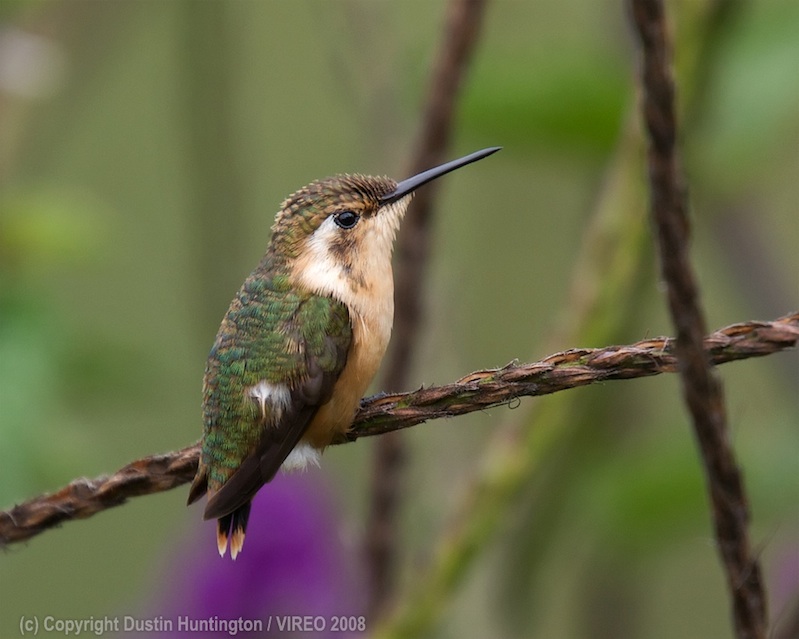
 Some of the 30+ birds we spotted were rare hummingbirds, including the tiny little woodstar (the size of a bumble-bee), the long-billed starthroat, the fab green-tailed trainbearer, and the grey-chinned hermit. 
I love the names of these tiny jewels of the mountains, as if they are giants carrying more than just their colors!
Little woodstar


Grey-chinned hermit

Long-billed starthroat
Green-tailed trainbearer


Foliage-gleaners that I had missed on my last trip were there for us. Another gem in its splendor was the grey and gold warbler. We could hear the rarely spotted Ochre-bellied dove and the Ecuadorian trogon, but never got sightings.
Our guide Tomas with his son


 On this trip, half the length of the last trip to Peru, I added 32 new species to my life-list giving me a total of 246 species for Peru and 1349 total world-wide.  Next stop???? who knows!

Henna-hooded foliage-gleaner
Grey and gold warbler

Sunday, June 23, 2013

NATIVITY OF ST. JOHN THE BAPTIST


Daniel Bonnell- USA
June 24 we celebrate the birthday of St. John The Baptist. Christians have long interpreted the life of  ST. JOHN the BAPTIST as a preparation for the coming of Jesus Christ. The circumstances of his birth, as recorded in the New Testament, are miraculous. John's pivotal place in the gospel is seen in the emphasis Luke gives to the announcement of his birth and the event itself- both made prominently parallel to the same occurrences in the life of Jesus.

At the Annunciation, when the Archangel Gabriel appeared to the Virgin Mary to inform her that she would conceive of the Holy Spirt, he also informed her that Elizabeth, her cousin, was already six months pregnant (Luke 1:36). Mary then journeyed to visit Elizabeth. Luke’s Gospel recounts that the baby “leapt” in Elizabeth’s womb at the greeting of Mary.


Brigid Marlin- USA

The sole biblical account of the birth of  St. John the Baptist comes from the Gospel of Luke. John’s parents, Zechariah or Zachary, a Jewish priest, and Elizabeth, were without children and both were beyond the age of child-bearing. During Zechariah's rotation to serve in the Temple in Jerusalem, he was chosen by lot to offer incense at the Golden Altar in the Holy Place. The Archangel Gabriel appeared to him and announced that he and his wife would give birth to a child, and that they should name him John. Due to Elizabeth's "old age" Zechariah did not believe the message of Gabriel and so was rendered speechless until the time of John's birth.


When the child was born, his relatives wanted to name the child after his father, but Zechariah wrote, "His name is John" . At this his mouth was opened and he could speak (Luke 1:5-25; 1:57-66). Following Zechariah's obedience to the command of God, he was given the gift of prophecy, and foretold the future ministry of John (Luke 1:67-79).

Birth of  St. John- Spanish 1525
Ordinarily the day of a saint's death is usually celebrated as his or her feast day, because that day marks their entrance into heaven. There are two notable exceptions: the birthday of the Blessed Virgin Mary and that of St. John the Baptist. Mary, already in the first moment of her existence, was free from original sin (Immaculate Conception), while John was cleansed of original sin in the womb of his mother. St. Augustine mentioned this belief as a general tradition in the ancient Church. He was "filled with the Holy Spirit even from his mother's womb" (Luke 1, 15) and, therefore, born without original sin.

 St. John the Baptist is patron of tailors (because he made his own garments in the desert), of shepherds (because he spoke of the "Lamb of God"), and of masons. This patronage over masons is traced to his words:
    Make ready the way of the Lord, make straight all his paths. Every valley shall be filled, and every mountain and hill shall be brought low, And the crooked shall be made straight, and the rough ways smooth. (Luke 3, 4-6.)

Athanasios Clark